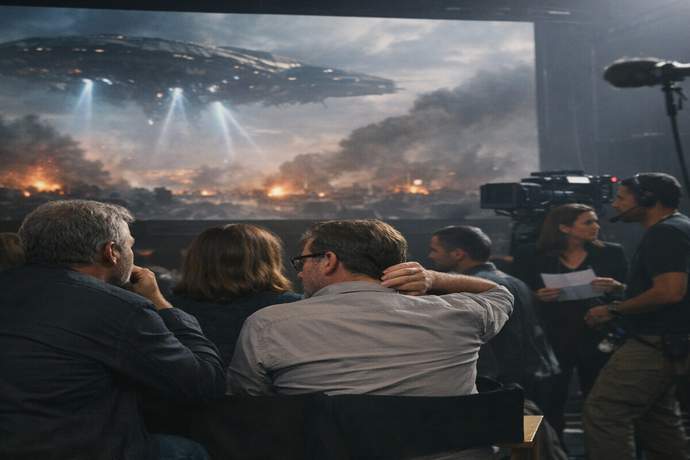
Spielberg’s sci‑fi comeback: expectations vs reality
Steven Spielberg walks into the theater carrying five decades of blockbuster baggage, and yes, people still want a little magic dust. His new film, The Day of Revelation, feels like a throwback announcement: grand ideas, lush visuals, and a composer’s score that tugs at the chest — maybe even one of John Williams’ last bows. Trouble is, the movie can’t quite decide whether it wants to thrill us or talk at us.
The first act: classic Spielberg moments
The opening stretches sparkle. There are those blink-and-you-smile shots where Spielberg’s cinematic tricks still land — a visual surprise here, a perfectly timed swell there. Williams’ music glues the emotion onto the images, lifting scenes that might otherwise feel simple into something more resonant.
Where it stumbles: the message takes over
Then things tilt. What starts as a film slowly slides into a platform for the director’s own argument. The screenplay begins to favor broad declarations over storytelling, and the balance between show and tell collapses. By the finale, the idea being shouted from the rooftops overshadows the movie itself, leaving the spectacle feeling like a supporting act for the sermon.
Been there before? Echoes of Spielberg’s past
There are obvious nods to earlier Spielberg touchstones — you can feel the ghost of Close Encounters in the atmosphere — but this time the emotional distance is noticeable. At moments the film seems less like a piece of cinema and more like a costly, heartfelt personal statement. Nostalgia is present, but the world is less forgiving now, and the film occasionally betrays that mismatch.
Tone and timing: a movie out of step
The overall vibe shifts from wonder to solemnity, and not in a way that feels earned. The director’s urgency is clear: he has Something to Say. But the delivery is heavy-handed, which blunts the impact. A bolder choice would have let the story breathe instead of turning every scene into a soapbox.
Small pleasures, big frustrations
Despite the misfires, there’s still pleasure to be found. The early visual beats and the score make for a memorable start, and there are flashes of the storyteller who made us gasp decades ago. Yet the film’s second half loses momentum, sliding into the same kind of indifferent territory that made some of Spielberg’s recent projects feel oddly lukewarm.
Bottom line: worthy ambitions, uneven results
The Day of Revelation is far from a disaster — it has moments that remind you why Spielberg became a name people circle on release calendars. But it also serves as a reminder that even legends can deliver work that feels more like a personal dispatch than a fully realized moviegoing experience. If you want cinematic dazzle with a side of preachiness, this is your ticket. If you wanted a true revelation, you might leave a little unsatisfied.
Where it sits in the Spielberg canon
Fans will compare it to everything from Close Encounters to the more divisive later efforts, and the conversation will linger on whether the film is a late-career masterstroke or simply another imperfect chapter. Either way, Spielberg’s fingerprints are all over it — sometimes brilliantly, sometimes stubbornly — and that’s still worth talking about.