Not your average planet-doc
This film starts like a nature special but slowly peels back layers until you’re staring at a complicated love-hate relationship between humans and polar bears. It uses gorgeous camera work to hook you, then swaps cute close-ups for questions about how our presence has reshaped both the animals and the communities that live with them.
A wise voice from the North
An elder from Arviat narrates in Inuktitut throughout, giving the movie a reflective, almost confessional mood. His quieter observations — part memory, part warning — thread the film together and make the audience feel the weight of cultural loss and the strain of living where old ways are colliding with modern life.
When conservation gets messy
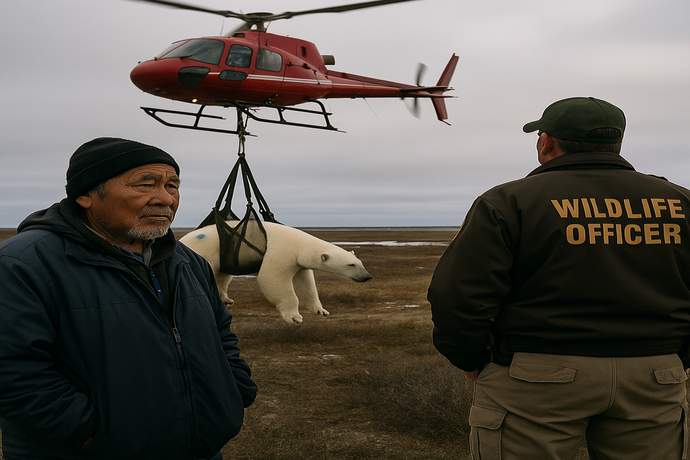
Some scenes are jaw-dropping in a not-so-great way: bears tranquilized, hoisted under helicopters, painted for tracking and fitted with transmitters. The film doesn’t flinch, and by showing the full procedure it forces a question: when protection programs traumatize animals, are we fixing the problem or creating new ones?
Tundra tourism and the absurdity of it all
Massive off-road tour buses, photographers on platforms and blinking tracking devices create images that are equal parts surreal and sad. There are also lighter moments — like a wily bear outsmarting a baited trap — that land as small victories in a landscape full of uneasy compromises.
Two worldviews in the same frame
A persistent tension runs through the film: Western conservation science versus Inuit knowledge and tradition. The Inuits in the movie argue their hunts and observations tell a different story about population and survival than what some Western experts assume, and that clash brings up moral and practical questions with no neat answers.
Music, mood and memorable shots
The score adds a surprising emotional punch, mixing rhythmic flourishes with atmospheric touches that make the Arctic feel both majestic and fragile. Visuals linger — from playful cubs to a lone bear with a faded green blotch on its back — and stick with you afterward in ways that are more melancholy than awe-struck.
What you’ll walk away thinking
Ultimately the movie isn’t just about polar bears; it’s about the ripple effects of colonialism, tourism and well-meaning conservation. It leaves you amused, a little outraged, and oddly tender toward these big, muddled animals and the people who’ve shared their lives with them for generations.