Why this doc shows up at the perfect moment
Everyone’s debating whether AI will kill real filmmaking. Enter Crocodile: a painfully human story about kids from Kaduna who turn curiosity and grit into movies. It’s a reminder that creativity still has a pulse — even if it’s produced on shoe-string budgets and sheer stubbornness.
A 13-year backyard experiment
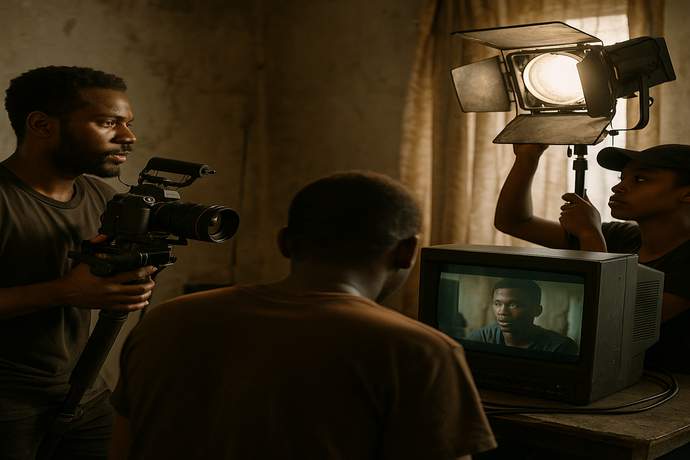
Crocodile follows a decade-plus journey of a filmmaking crew that began with a single phone and a ton of imagination. Over the years they grew from cousin-and-sibling backyard shorts into a serious collective exploring sci-fi and superhero stories in a Nigerian voice.
The timeline jumps around, but the throughline is clear: this is a group that kept making stuff despite every imaginable setback — power cuts, money problems, and the chaos of daily life in a place where film infrastructure isn’t handed to you.
Meet the Critics — well, some of them
The doc introduces a handful of personalities: Godwin, who seems to steer the ship (or at least tries to); Raymond, the practical second-in-command who often gets frustrated; Richard, who gives a classic talking-head intro; and Rachael, a nine-year-old wunderkind who acts brilliantly and eventually tries directing.
But the movie doesn’t hand out name tags for everyone. Several members pop up with little context, so you get the vibe of a tight crew without a formal roll call. That ambiguity frustrates at times — you want to know who’s who and how old they really are — but it also preserves a sense of messy reality.
Style: rough, intimate, sometimes maddening
Director Pietra Brettkelly mostly shadows the group, letting scenes breathe and unfold without much voiceover explanation. If you’re a fan of fly-on-the-wall cinema, this will be a treat; if you crave tidy exposition, it can feel like being dropped into the middle of a conversation with half the names missing.
The film mixes the Critics’ own footage with behind-the-scenes material and clips from their sci-fi projects. Those homemade sequences are often the most charming: raw, inventive and occasionally hilarious in how they blend real life with fantasy.
The tech and the mystery of how they do it
You see upgrades — they start on a cellphone, receive a nicer camera from a famous benefactor, and clearly improve over time — but the doc skims the fine print. Are they using advanced VFX tools? Any AI help? The movie hints at savvy technical chops but doesn’t map out the workflow.
That ambiguity is part curiosity, part annoyance. You want to celebrate their DIY wins but also understand how they learned — self-taught hustle, online tutorials, generous patrons? Crocodile leaves you guessing.
Money, contracts and a real low point
The film teases questions about financing: YouTube revenue, donations, and occasional equipment gifts all play a role, but the economics never get a full accounting. There’s also a subplot involving a lawyer/business manager that turns sour and provides the documentary’s darkest notes.
These moments of tension — a possible split, interrupted Zoom calls when the lights go out — remind you that ambition and real-world logistics aren’t romantic. They’re messy, expensive, and sometimes heartbreaking.
Where life bleeds into fiction
One of Crocodile’s clever moves is showing how the crew’s own neighborhood stories feed into their sci-fi fantasies. Their films are clearly inspired by Hollywood touchstones, but the end result is filtered through a distinctly Nigerian lens — loud, personal and oddly specific.
Watching those mini-epics alongside rehearsal footage highlights how their lived experience shapes their imagination. The DIY look never feels like a limitation; rather, it’s the texture that makes their work feel honest.
What nags at you while you watch
The documentary’s looseness is both a strength and a weakness. It captures spontaneity but often withholds key details — ages, exact relationships, and the nuts-and-bolts of their production model. That leaves the viewer curious in a teasing way, rather than satisfied.
At times you want the director to step in and say, “Okay, here’s who does what and how they’re funded.” Instead, you get a collage of moments that ask the audience to assemble the story themselves.
Why Crocodile still matters
Despite its gaps, the film is an uplifting portrait of people who refuse to wait for permission to tell their stories. It’s less about polish and more about a relentless appetite to create — to build movies with the tools on hand and an unshakable sense of identity.
For viewers tired of glossy but soulless CGI, Crocodile is a bracing reminder that voice, community and hustle can outshine any fancy effects package.
The bottom line
Crocodile is inspiring, occasionally infuriating, and frequently charming. It doesn’t answer every question, but it captures the joyful chaos of a group teaching themselves to dream bigger than their circumstances. If you like documentaries that feel lived-in rather than perfectly plotted, this one’s for you.